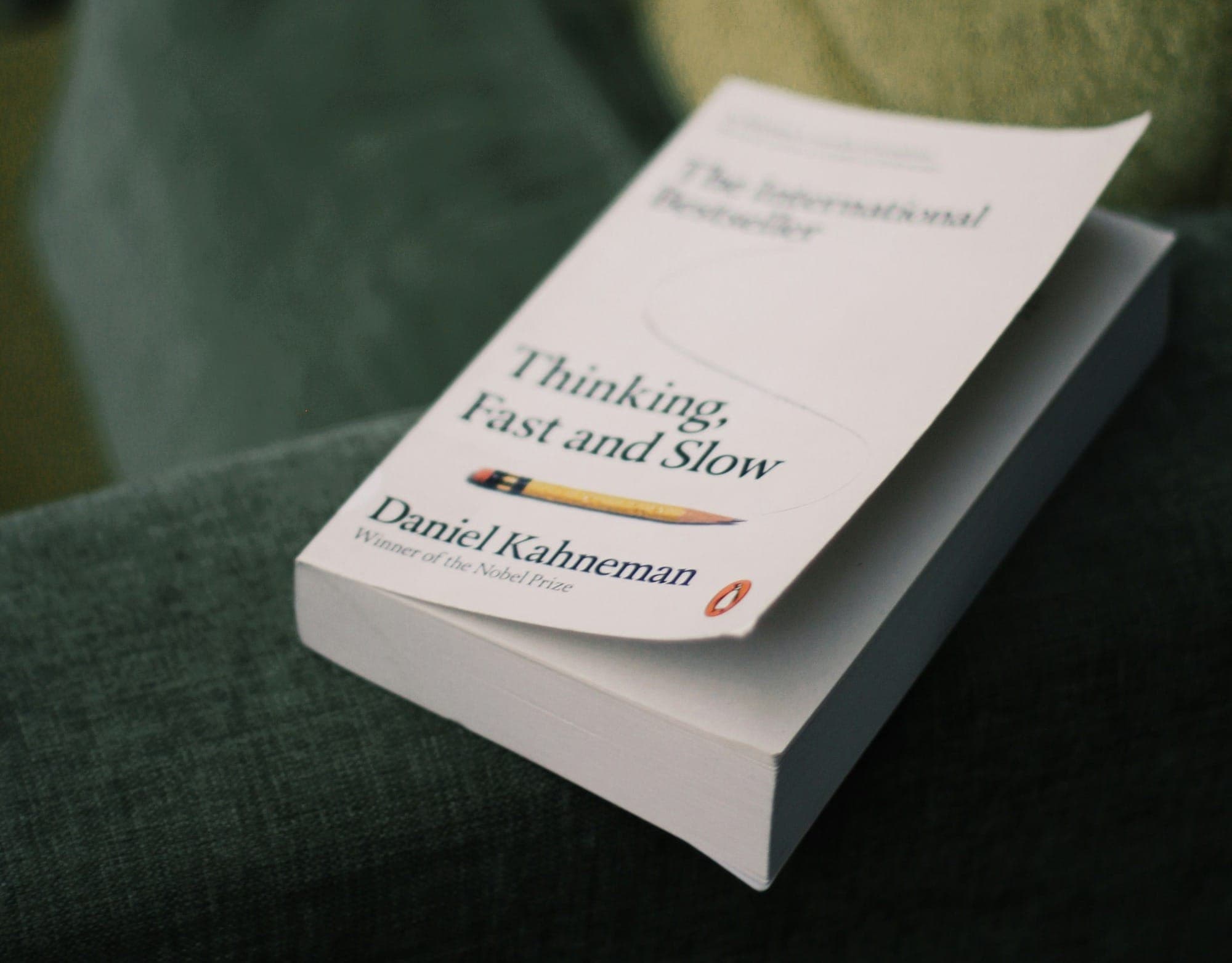
System 1 AI Models, the Missing Piece in Your Agent Stack
Most AI agents pay full chatbot prices for simple routing decisions. Here is why classification models, not chatbots, are actually built for that job.
Before AI chatbots became fluent, the people building AI split their work into two kinds of problems. One kind was about predicting a number: tomorrow's demand, a price, what comes next in a pattern. The other kind was about classifying: given something new, sort it into one of a few known buckets. Is this email spam or not. Is this transaction fraud or not. Which of these categories does this request belong to.
Then chatbots like ChatGPT and Claude showed up and made things blurry. A chatbot writes its answer one word at a time. Picking each word is a tiny act of sorting, one choice out of tens of thousands of options. String enough of those choices together and you get a full reply. That part is real. It is also where the trouble starts.
Most of the decisions a real system has to make are not "write me a paragraph." They are small. Which of these ten buttons does this request need. Is this urgent or not. Does this go to billing or to engineering. Those are sorting decisions: one answer, from a short list, no writing required. But once chatbots became the tool everyone reached for, people started asking a model built to write essays to sort things into buckets instead. It works. It also means paying to write an invisible sentence just to throw it all away except the one answer needed.
I found this out the expensive way.
The retrain wall
Last year I was building an AI agent for one of the largest food and drug retailers in the US. Users came in through a chat window, and the system's first job, before anything else happened, was figuring out what they actually wanted. Reorder a prescription. Check a delivery. Complain about a coupon. File a return. The list of things users could ask for kept growing every few weeks, because that is what happens once real people start typing real messages at a live product.
I started with a small model built specifically to sort messages into the right category. It worked well at first, but it did not hold up. Every time we added something new for it to recognize, someone had to teach it from scratch and put it back into production. The pile of "just add this one more thing" requests grew faster than I could keep up. The model was fast and cheap to run. It was also becoming impossible to maintain.
So I did what a lot of people were doing at the time. I swapped it for a chatbot. Feed it the message, ask it to pick a category from a list, done. No retraining. Just a question.
It solved the maintenance headache overnight. It also quietly created a new one. Every message, before the system did anything useful with it, now had to wait for a full chatbot reply. A trip out to the model. Several hundred milliseconds at best. A real cost on the bill. Multiply that by every message and every day. The fix that solved my problem was now the slowest, most expensive part of the system, and it ran before the real conversation had even started.
At the time, I chalked it up to a fair trade. More flexibility costs more money, that is just how it goes. Looking back, the real issue was sitting in plain sight. I was asking a model built to write full answers to do a job that should have taken one fast, cheap check. Sorting a message into a category was never a writing problem. It only became one because writing was the only tool flexible enough to keep up with how fast the list kept growing.
That gap, the space between "too rigid to maintain" and "too expensive to run at scale," is exactly where a new category of model just showed up.
A model built to decide, not write
On September 15, 2026, a company called TypeSafe AI introduced its first product, a model named Jev. I want to be upfront about the timing: this model is nine days old as I write this. It is still in early testing, and every number attached to it comes from the company itself, not from an outside check. Treat what follows as a live signal, not a settled fact. The idea behind it matters more than the company does.
TypeSafe calls Jev a "System One model." The name borrows from a well-known idea in psychology: people have two ways of thinking. One is fast and automatic, like recognizing a friend's face. The other is slow and deliberate, like solving a math problem step by step. Most AI chatbots work like the slow, deliberate kind, even for questions that do not need that much thought. Jev is built to work like the fast kind.
Here is the practical difference. Ask a chatbot a question and it writes an answer, word by word, like a person typing a reply. That is flexible, but it is slow, and it costs money for every word, even when all a system actually needed was one word. Jev skips all of that. Give it a message and a short list of possible answers, and it picks one, instantly, along with how confident it is in that pick. No essay. No waiting for the model to think out loud. Just the answer.
That confidence score is the part I would have wanted on the retailer project. If the model is confident about what a user wants, the system can act on it right away. If not, it can hand the message to a person instead. No extra work to force a clean answer out of a paragraph.
The company's own claim, again with the caveat that it is unproven: Jev performs close to some of today's strongest AI models. It costs a tiny fraction as much and answers in a fraction of a second instead of several. Whatever the real number turns out to be once outsiders test it, the gap is the whole point. This was never meant to be a smarter model. It is a faster, cheaper way to answer a question that never needed a "smart" model to begin with.
Inside a real system, that covers more ground than it might sound like. Figuring out what a user wants. Deciding which tool should handle a request. Catching spam or fraud before it goes further. Deciding when a person should step in instead of the AI. None of that needs a written answer. It just needs a decision.
I am not telling you to rebuild your systems around a product that is nine days old. I am telling you the idea behind it is real. It now has a name, and it is already inspiring a wave of free, open alternatives built by people outside any one company. That is worth its own post. This one is about the shape of the problem: stop paying for a written answer when all a decision needed was a choice.
Use the right tool for each job
If a decision does not need a sentence, do not pay for one.
I build agent systems for a living now, and the retailer project taught me a lesson I use on every engagement since. The fastest way to make an AI system both cheaper and more reliable is to stop making one model do every job. Let a language model write and reason. Let a classification layer decide, fast and cheap, on everything that is really just sorting.
If your agent stack is paying full model prices for decisions that should take milliseconds, I would like to look at it. Book a free 30-minute scoping call. I will walk through where the classification jobs are hiding in your orchestration layer, and what it would take to pull them out.